
Residential · For: co-op owners planning a renovation
What a NYC co-op or condo alteration agreement usually requires, how city rules fit in, and how to get your renovation approved without delays.
Quick answer
A co-op alteration agreement is the building’s contract for your renovation. It typically requires plan review by the building’s architect or engineer, contractor insurance the building approves, a security deposit, indemnification, set work hours, deadlines with penalties, lien protections, and limits on moving kitchens and baths.
Key takeaways
- Boards are advised to review actual insurance policies, not just certificates.
- Deposits are often held until the building and city sign off on finished work.
- Your contractor needs a DCWP license for work in your own apartment.
- A complete package up front is the fastest path to approval.
What is an alteration agreement?
An alteration agreement is the contract between a co-op or condo and the owner who wants to renovate. It sets the rules for the work — what can be changed, who reviews the plans, how the building is protected, and what happens if something goes wrong. Most NYC buildings won’t let a renovation start until it is signed and the board has approved the plans.
What it usually requires
| Provision | What it typically covers |
|---|---|
| Plan review | The board, usually through its own architect or engineer, reviews your plans and may approve, approve with changes, or reject items. Review fees are commonly the owner’s cost. |
| Insurance | Contractors must be fully insured, often including umbrella coverage. Boards are advised to require “action-over” coverage and to review the actual policies, not just certificates. |
| Security deposit or escrow | A deposit sized to the project, often held until the building’s architect and city agencies sign off on the finished work. |
| Indemnification | You take responsibility for damage to common areas or neighbors and for related claims. |
| Work hours and seasons | Limits on hours of the day, and sometimes months of the year, when work can happen; some buildings cap how many renovations run at once. |
| Deadlines and penalties | Dates for submitting documents and finishing work, with penalties for overruns. |
| Liens | Any mechanic’s lien must typically be bonded within 30 days, and contractors provide lien waivers at the end. |
| Wet-over-dry and stack rules | Restrictions on putting kitchens or baths over neighbors’ living space and on relocating water and waste lines. |
Need help with a board package?
We prepare the contractor side — insurance, licenses, schedule, and scope — so the board has what it needs.
City rules still apply
- DOB permits are still required for work beyond the exemptions — moving plumbing, new circuits, structural changes. See which renovations need a DOB permit.
- Your contractor needs a DCWP Home Improvement Contractor license. NYC generally exempts work in buildings with more than four units, but not work an owner or tenant contracts for in their own apartment — which is exactly what a co-op or condo renovation is.
- Construction hours default to 7 a.m.–6 p.m. on weekdays; buildings often set narrower windows.
How long board approval takes
There is no official standard. Each co-op board and managing agent sets its own review process, and none of the sources we checked publishes reliable average approval times. Ask your managing agent for the board’s review schedule and submission checklist before you set a start date, and build that time into your plan.
How to get approved faster
- Get the building’s alteration agreement and house rules before you finalize the design.
- Check what’s prohibited up front — some buildings ban items like through-wall AC units or certain tubs.
- Have your contractor’s insurance certificates issued exactly as the building requires, naming the parties the agreement lists.
- Submit a complete package: plans, scope, schedule, licenses, and insurance together.
- Budget for the building’s review fees, deposit, and the time the board needs.
Real project
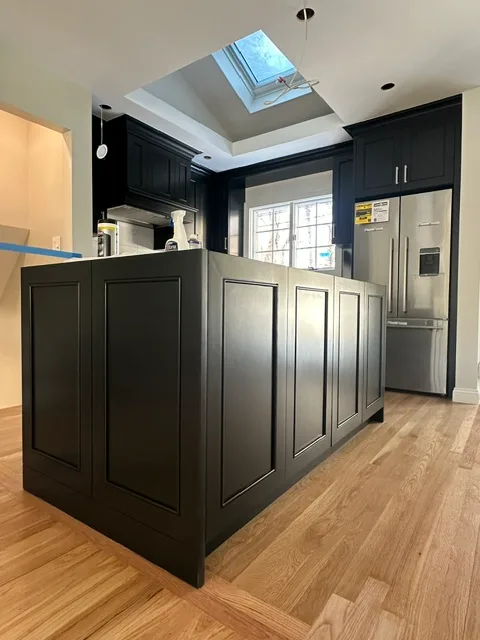
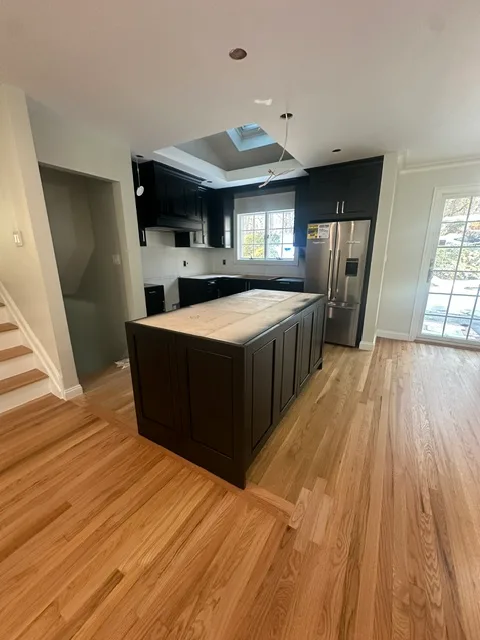
Residential Kitchen & Living Space Remodel — custom cabinetry, coffered ceilings, and new floors.
FAQ
Is an alteration agreement legally binding?
Yes. It is a contract between you and the building, and boards can enforce its terms, including deposits, penalties, and indemnification.
Who pays for the building’s architect to review my plans?
Usually the owner. Review fees are commonly passed through to the shareholder or unit owner.
Does my contractor need a license for a co-op renovation?
Yes. In NYC, a DCWP Home Improvement Contractor license is required for work an owner or tenant contracts for in their own apartment, even in buildings with more than four units.
Can I renovate in the summer only?
Some buildings restrict work to certain months or hours. Check your building’s agreement before scheduling.
How we put this guide together
This guide summarizes typical alteration agreement provisions from Habitat magazine and Brick Underground, plus NYC licensing rules from official city pages, all checked on October 28, 2026. The draft was prepared with AI assistance, and every fact was checked against the cited sources on October 28, 2026. Sanjay D. reviews each article before publication. It isn’t legal advice — have your attorney review your building’s agreement.
Related

Free site walk & estimate
Want a real number for your space?
Call for a quote, or request a free site walk and a written, line-item estimate.