
Process · For: anyone choosing between one contractor and separate trades
An honest side-by-side on schedule, risk, licensing, insurance, and cost — including when hiring trades yourself makes sense in New York.
Quick answer
For jobs with several trades, one general contractor usually lowers schedule and coordination risk, because one company sequences the work, carries the insurance the building asks for, and coordinates approvals. Hiring trades directly can work for single-trade jobs if you can verify every license and policy and manage the schedule yourself.
Key takeaways
- Electrical and plumbing must be done by licensed trades either way.
- Residential home improvement over $200 needs a DCWP license in NYC.
- A general contractor’s supervision and fee are part of the price; in return, one foreman owns the schedule.
- Buildings often require insurance proof from every contractor on site.
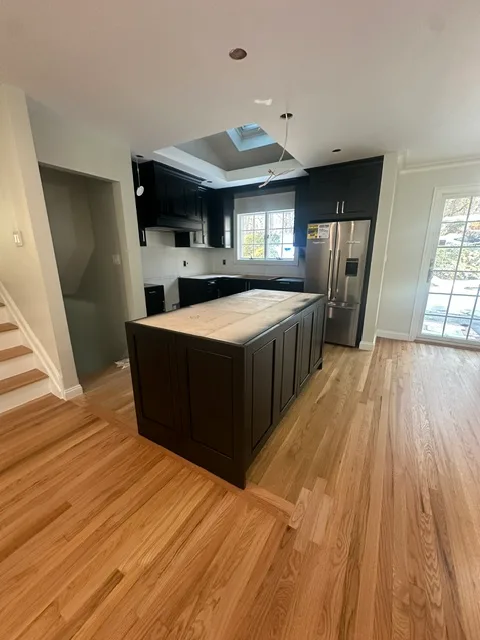
What actually changes between the two approaches?
| One general contractor | Separate trade contractors | |
|---|---|---|
| Contracts | One | One per trade |
| Who sequences the trades | The GC | You |
| Who absorbs a late trade | The GC’s schedule | Your schedule |
| Insurance certificates the building reviews | One set from the GC (plus subs as required) | One per trade |
| Coordination with permits and building approvals | The GC coordinates | Each trade, or you |
| Warranty on finished work | One point of responsibility | Separate per trade, with gaps between them |
NYC licensing rules apply either way
- Electrical work must be performed by electrical contractors licensed by the NYC Department of Buildings.
- Plumbing work must be performed by a Licensed Master Plumber.
- Plans for work that needs a permit are filed by a licensed engineer or architect.
- Residential home improvement work over $200 in NYC needs a DCWP Home Improvement Contractor license — including kitchen cabinet installation and wall, ceiling, or drywall work. In buildings with more than four units, a license is still required for work an owner or tenant contracts for in their own apartment.
If you hire trades yourself, checking every one of these is your job. The New York City Bar notes that an unlicensed home improvement contractor generally cannot enforce the contract against the owner — a protection for you, but also a sign of how seriously licensing is treated.
See both options priced for your space
We price the job as one contract and show you the line items, so you can compare.
Insurance and building requirements
Co-op, condo, and commercial buildings usually require proof of insurance before anyone starts. Habitat magazine’s guidance to boards recommends that every contractor be insured, that coverage include “action-over” protection for claims where an injured worker sues the building, and that boards review the actual policy rather than only a certificate. With separate trades, each one has to meet those requirements; with a GC, one company is accountable for making sure they’re met.
What does coordination cost?
Coordination isn’t free, and it shows up in the price: a general contractor’s supervision, site management, and fee are part of every bid. Hiring trades directly can avoid some of that, but the scheduling, supervision, and risk move to you.
When hiring trades directly makes sense
Choose one GC if…
- Three or more trades are involved
- You have a lease, opening, or move-in date
- The building requires one accountable contractor
- You don’t want to manage the schedule
Hire trades directly if…
- It’s a single-trade job, like painting
- Your timing is flexible
- You can verify each license and policy
- You’re comfortable coordinating handoffs
FAQ
Is a general contractor more expensive?
The GC’s supervision and fee are part of the price. On multi-trade jobs, one schedule and one point of responsibility often offset that by avoiding gaps between trades.
Can I hire my own electrician and use a GC for the rest?
Often, yes, if your contract says who coordinates and who is responsible for the interface between trades. If you want to hire some trades yourself, ask at the site walk which items can be split out of the estimate and how that changes the schedule and who coordinates.
How do I check a contractor’s license in NYC?
DCWP offers a license check for home improvement contractors, and the Department of Buildings publishes lookups for master electricians, master plumbers, and licensed engineers and architects.
Does a GC need a license in NYC?
For residential home improvement work, the contractor needs a DCWP Home Improvement Contractor license. DOB’s General Contractor registration applies to contractors building new one-, two-, and three-family homes. Requirements in Nassau, Suffolk, and Westchester are set by each county.
How we put this guide together
This guide draws on official NYC agency pages, the New York City Bar, Habitat magazine, all checked on October 28, 2026 and listed below. The draft was prepared with AI assistance, and every fact was checked against the cited sources on October 28, 2026. Sanjay D. reviews each article before publication. It isn’t legal advice.
Sources
- NYC 311 — Home Improvement Contractor license — When a DCWP license is required
- NYC DOB — Electrical permit — Licensed electrical contractors
- NYC DOB — Plumbing project requirements — Licensed Master Plumbers
- NYC DOB — General Contractor Registration
- New York City Bar — Why all home improvement contractors need to be licensed — Last modified May 15, 2023
- Habitat — Alteration agreements must have these three elements (Mar 16, 2018)
Related

Free site walk & estimate
Want a real number for your space?
Call for a quote, or request a free site walk and a written, line-item estimate.