
Residential renovations · NYC & Long Island
Residential renovation contractor in New York City and Long Island
Kitchens, baths, living spaces, and full renovations in co-ops, condos, and houses. One crew and one foreman handle demolition, framing, electrical coordination, cabinetry, and finishes.
- Projects from $25K to $1M
- $2M liability + $5M umbrella
- Founded by a former union foreman
- NYC & Long Island
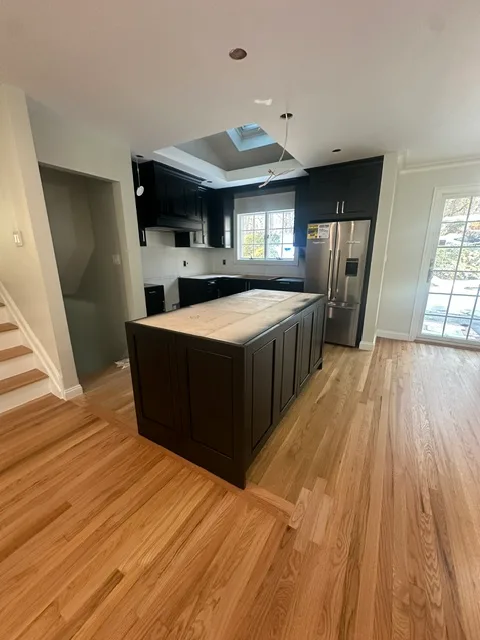
In short: In New York City, home improvement work over $200 generally requires a contractor licensed by the Department of Consumer and Worker Protection (DCWP), and most co-ops require an alteration agreement before work starts. Elite quotes every residential job after a free site walk, for projects from $25,000. Elite works across New York City and Long Island, where permits and licensing follow town and county rules.
Before you hire
NYC rules every homeowner should know
These rules protect you. Check them before you sign with any contractor.
Your contractor needs a DCWP license
Residential home improvement work over $200 requires a DCWP Home Improvement Contractor license. It covers work like cabinet installation and walls, ceilings, and drywall, but not painting, electrical, or plumbing.
Unlicensed contracts are hard to enforce
The New York City Bar notes that an unlicensed home improvement contractor generally cannot enforce the contract against the owner.
Co-op boards set their own conditions
Alteration agreements typically cover a deposit, insurance, work hours, and review of your plans before work starts.
Some work needs a DOB permit
Painting, plastering, new cabinets, and plumbing fixture replacement are exempt. Structural changes, exit changes, and plumbing beyond fixture replacement need a permit.
$200
Residential home improvement work above this amount requires a DCWP-licensed contractor.
45 sq ft
Most partition wall you can permanently remove in a residence without a permit (or 50% of the wall, whichever is less).
Source: NYC DOB, 1 RCNY 101-14
$600 / $6,000
DOB penalty to legalize unpermitted work: $600 in a one- or two-family home, $6,000 in other buildings.
Cost
What does a residential renovation cost?
Elite does not publish a price list. Call for a quote, or book a free site walk for a written, line-item estimate. These are the factors that move a residential price most in New York.
| Cost driver | Why it matters |
|---|---|
| Building type | Co-ops and condos add board requirements such as deposits, insurance, and work-hour limits. |
| Plumbing scope | Replacing fixtures needs no permit; moving or adding piping needs a Licensed Master Plumber and a permit. |
| Walls and layout | Removing more than the 1 RCNY 101-14 limits, or any load-bearing or fire-rated wall, needs a permit. |
| Electrical | New circuits and fixtures are done by a DOB-licensed electrical contractor and filed with DOB. |
| Cabinetry and finishes | Custom cabinetry and millwork cost more than stock boxes but fit the space exactly. |
What’s included
Whole-home work, one crew
Kitchens
Layout, cabinetry, counters, lighting, and finishes.
Bathrooms
Tile, vanities, and fixtures; any plumbing beyond fixture replacement is done by a Licensed Master Plumber with a permit.
Living spaces and basements
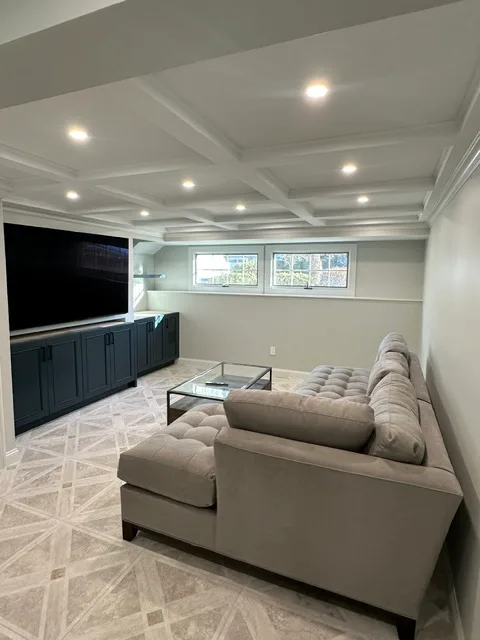
Built-ins, media walls, ceilings, and lighting.
Building paperwork
Insurance certificates, schedules, and scope details your co-op, condo, or managing agent asks for.
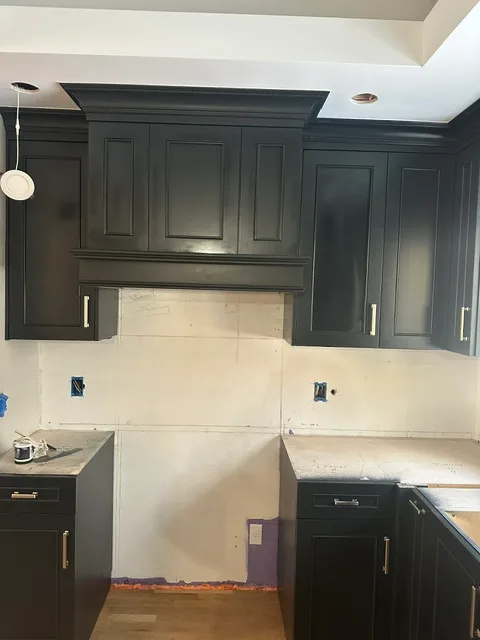
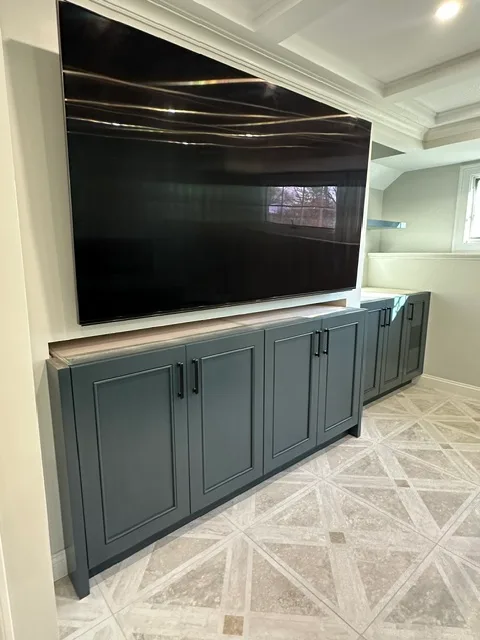
Recent work
Residential Kitchen & Living Space Remodel
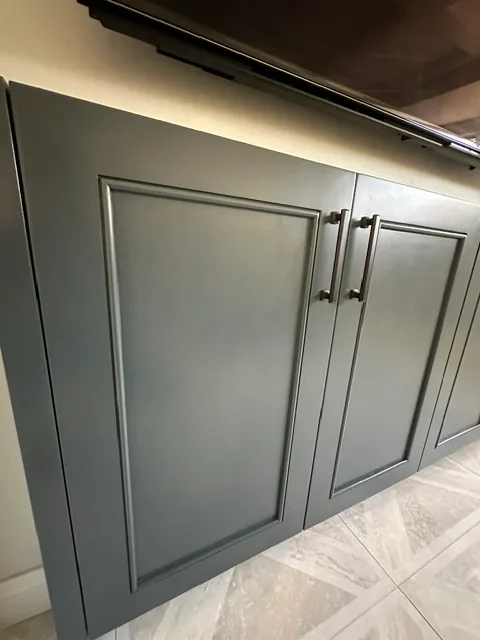
A kitchen and living-space renovation with a custom island, full-height cabinetry, a media wall, and a coffered basement ceiling.
How it works
How a home renovation runs with Elite
- Site walkWe walk your home, review plans or ideas, and note building rules.
- Line-item estimateA written estimate by trade, so you can compare bids line by line.
- Board and permit prepWe provide what your board or DOB filing needs before demo starts.
- Build under one foremanEvery trade on one schedule with one point of contact.
- Punch list and handoverWe walk the finished space together and close every item.
Compare
Renovating a co-op apartment vs. a house
| Co-op apartment | One- or two-family house | |
|---|---|---|
| Board approval | Alteration agreement is typical: deposit, insurance, work hours, plan review | No board approval; DOB rules still apply |
| DCWP contractor license | Required for work over $200 that an owner or tenant contracts for in their own apartment | Required for work over $200 |
| Penalty to legalize unpermitted work | $6,000 | $600 |
| Work hours | Set in the alteration agreement, on top of DOB limits | DOB limits: after-hours work needs a variance |
FAQ
Common residential renovation questions
Does my contractor need a license in NYC?
Yes. Residential home improvement work over $200 requires a DCWP Home Improvement Contractor license. Ask for the license number and check it before you sign. See how to check a contractor’s license.
What will my co-op board ask for?
Typically an alteration agreement with a deposit, proof of insurance, approved plans, and work-hour rules. See what co-op alteration agreements cover.
Does a kitchen renovation need a permit?
Installing new cabinets and replacing plumbing fixtures does not. Moving plumbing, or removing walls beyond the 1 RCNY 101-14 limits, does. See which renovations need a DOB permit.
How much does a renovation cost?
It depends on your building, plumbing, layout, and finishes. Call for a quote or book a free site walk. Elite takes projects from $25,000.
How long does a renovation take?
Scope, board approvals, and building work hours drive the timeline. You get a written schedule with your estimate.
Do you work on Long Island?
Yes. Elite works in all five New York City boroughs and on Long Island, in Nassau and Suffolk counties.
Free site walk & estimate
Planning a renovation? Let’s walk your home.
Call for a quote, or request a free site walk and a written, line-item estimate.